Subzero Ethanol Percolation vs. Warm Folk Maceration: Bench Results
By Julian Vance (Director of Extraction) on · 0 comments
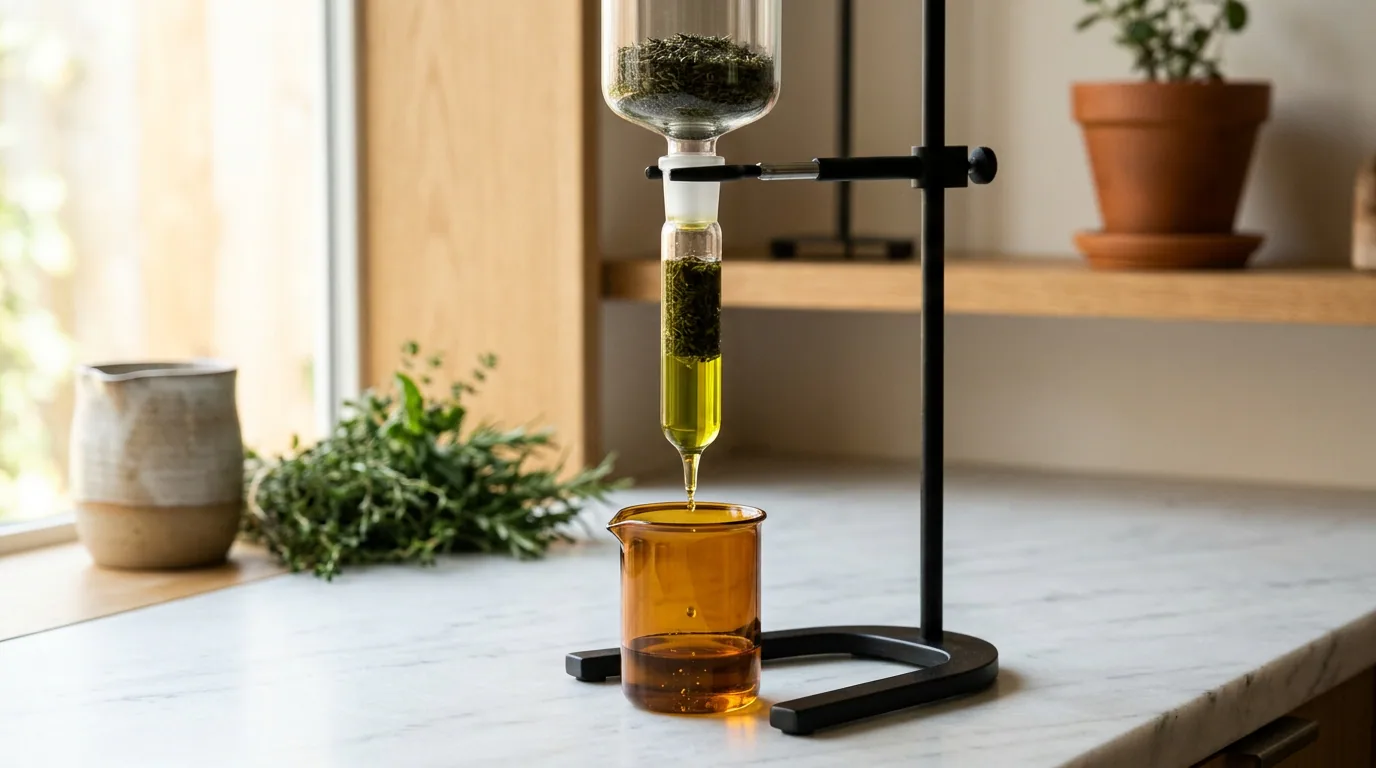
Traditional herbalists steeped chopped roots and blossoms in room-temperature grain spirit for four to six weeks. While effective at pulling broad-spectrum alkaloids and polyphenols, warm maceration also dissolves heavy epicuticular waxes, bitter tannins, and water-soluble chlorophyll.
Why Chilling Solvent to -40°C Changes Selectivity
When certified organic 190-proof cane ethanol is chilled to -40°C inside jacketed borosilicate columns, polar water-soluble pigments and long-chain plant lipids freeze solid inside the cellular matrix. Passing the cold menstruum through milled botanicals for 45 minutes extracts resinous actives and aromatic sesquiterpenes while leaving heavy waxes behind.
After gentle vacuum recovery at 31°C, we blend the resulting golden oleoresin into cold-pressed fractionated coconut MCT oil or vegetable glycerin. The finished sublingual drops taste crisp and herbal rather than grassy or astringent. This selectivity builds directly on how raw material is handled post-harvest, as detailed in Preserving Monoterpene Ratios During a 21-Day Cold Barn Cure.
Reading Your Batch Certificate of Analysis
Every 30 mL and 60 mL dropper bottle carries a laser-etched lot code on the base. Entering or matching that code against our published lab sheets confirms:
- Active phytocompound milligrams per 1.0 mL graduated pipette mark.
- Zero detectable residual solvents below 10 ppm USP thresholds.
- Heavy metal screening (lead, arsenic, cadmium, mercury) and microbial clearance.
For practical guidance on timing sublingual servings before sleep, read Structuring a Two-Stage Evening Botanical Wind-Down Protocol.