Ultraviolet Filtering & Two-Way Humidity Packs: 12-Month Shelf Stability Data
By Julian Vance (Director of Extraction) on · 0 comments
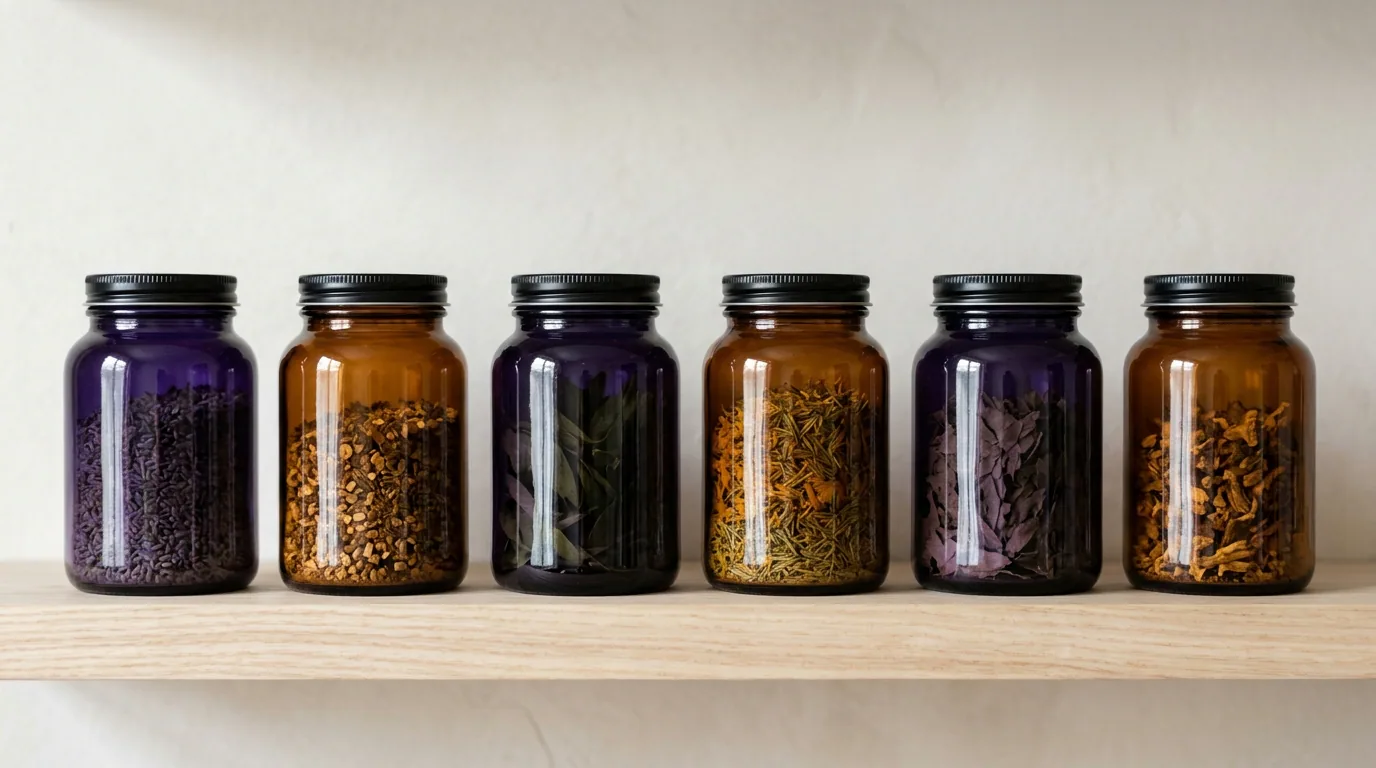
Oxygen, heat above 22°C, and visible light wavelengths between 450 nm and 720 nm are the three primary drivers of oxidative degradation in dried botanical flowers and cold-pressed tinctures. Leaving a clear glass display jar on a sunlit kitchen shelf can oxidize over a quarter of its fragile aromatics within thirty days.
Twelve-Month Jar Comparison
We split a single homogenized harvest batch—grown in remineralized beds as described in Living Soil Mineral Balance: Why Fungal-Dominant Beds Outperform Hydroponic Salts—across three 250 mL container types stored in normal studio daylight at 20°C:
- Clear Flint Glass: Lost 34.2% of volatile monoterpenes by month six and developed papery dryness.
- USP Type III Amber Glass: Retained 84.6% of baseline aromatics at month six and 76.1% at month twelve.
- Heavy Dark-Violet & Amber Apothecary Glass + 58% RH Salt Pack: Retained 91.4% of baseline aromatics at month six and 86.8% at month twelve.
Everyday Dispensary Drawer Habits
Keep daily-use jars sealed tightly between servings, avoid opening chilled containers until they warm to room temperature (preventing condensation inside the lid), and store backup bottles in a cool linen closet away from oven or radiator walls. Pairing sound storage with a measured evening routine—see Structuring a Two-Stage Evening Botanical Wind-Down Protocol—ensures the last dropper tastes identical to the first.